
← Back to Case Studies

2Connected product experiences
User interviewsDesign validation and iteration
5Initial Luna AI workflows
PetLoveFam · EN
PetLoveFam
Turning a connected pet-care ecosystem into a focused, trust-centered product strategy
PetLoveFam connects pet owners, veterinary clinics, and service providers through two core experiences: the PetLoveFam mobile app and PetLoveHub for clinics. User interviews helped validate and improve the app, while clinic discovery reshaped the market-entry strategy around Luna AI, WhatsApp, and a lightweight clinic platform.
Overview
PetLoveFam began with a broad vision: create a connected ecosystem where pet owners, veterinary clinics, and pet-service businesses could manage more of the pet-care journey through one coordinated platform.
The opportunity was compelling, but the original scope introduced a critical product question: what should be built first to create meaningful value without asking clinics or pet owners to change too much at once?
Answering that question required more than interface design. It required customer discovery, product validation, business-model development, technical prioritization, and a willingness to reshape the original vision around what customers and clinics were prepared to adopt.
My contribution
Product vision and strategy
Defined the ecosystem, product relationships, market-entry sequence, and phased roadmap.
Customer discovery
Planned and conducted interviews with pet owners and gathered feedback from veterinary clinics.
UX and product design
Created journeys, information architecture, workflows, wireframes, prototypes, and interface direction.
Design validation
Tested the PetLoveFam app with users and iterated navigation, hierarchy, terminology, and task clarity.
AI workflow design
Defined Luna’s core use cases, boundaries, context gathering, and human-escalation behavior.
Founder-led execution
Connected product decisions with commercial adoption, technical scope, and team coordination.
The opportunity
Pet owners and clinics often manage care through disconnected tools, informal reminders, separate service providers, and long WhatsApp conversations. PetLoveFam was designed to connect both sides of that fragmented experience.
PetLoveFam
A customer-facing mobile experience for pet profiles, appointments, care reminders, providers, and services.
PetLoveHub
A clinic-facing web platform for communication, customers, pets, appointments, and future operations.
Luna AI
A controlled assistant for common clinic conversations, intake, scheduling, escalation, and follow-up.
Pet owners
↔
PetLoveFam
↔
PetLoveHub
↔
Luna AI
↔
Veterinary clinics
Designing the PetLoveFam app
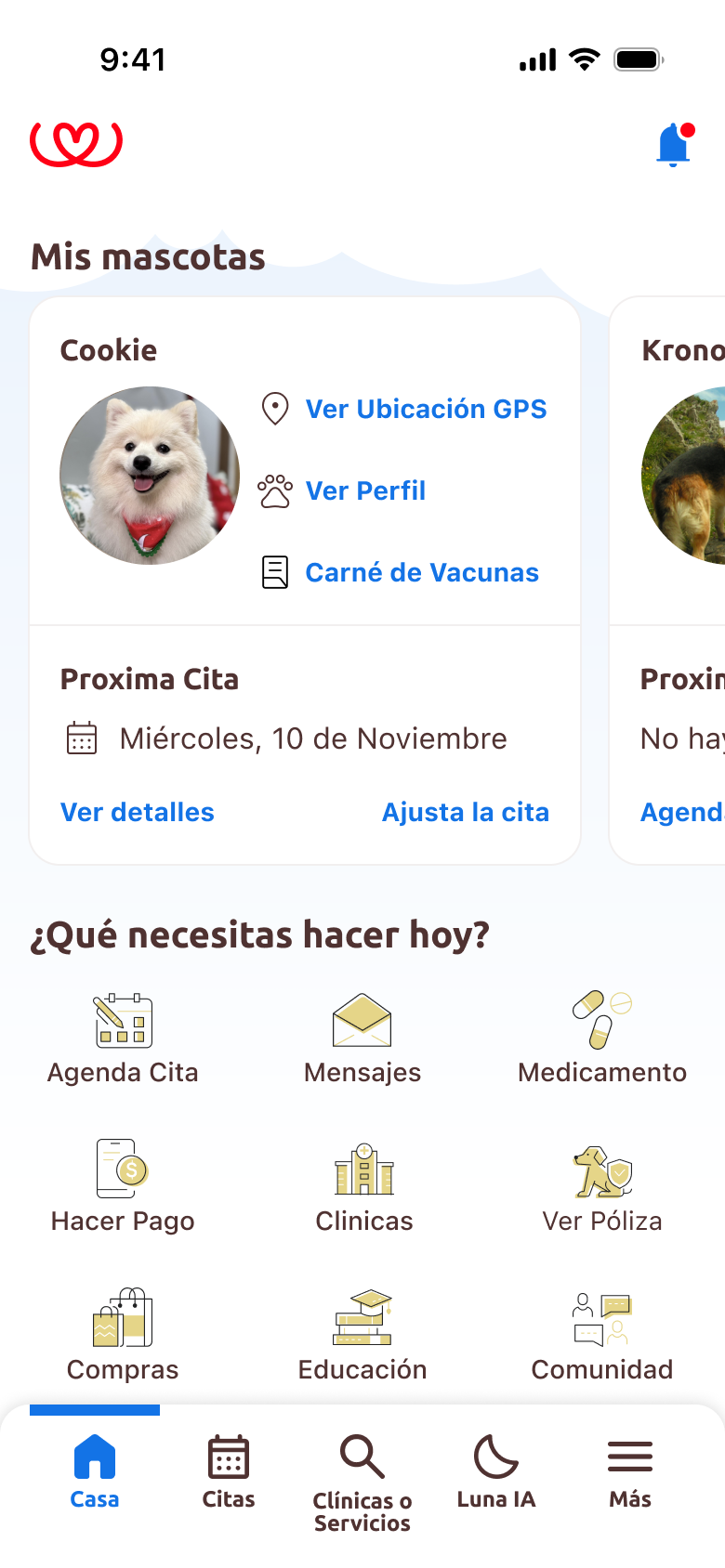
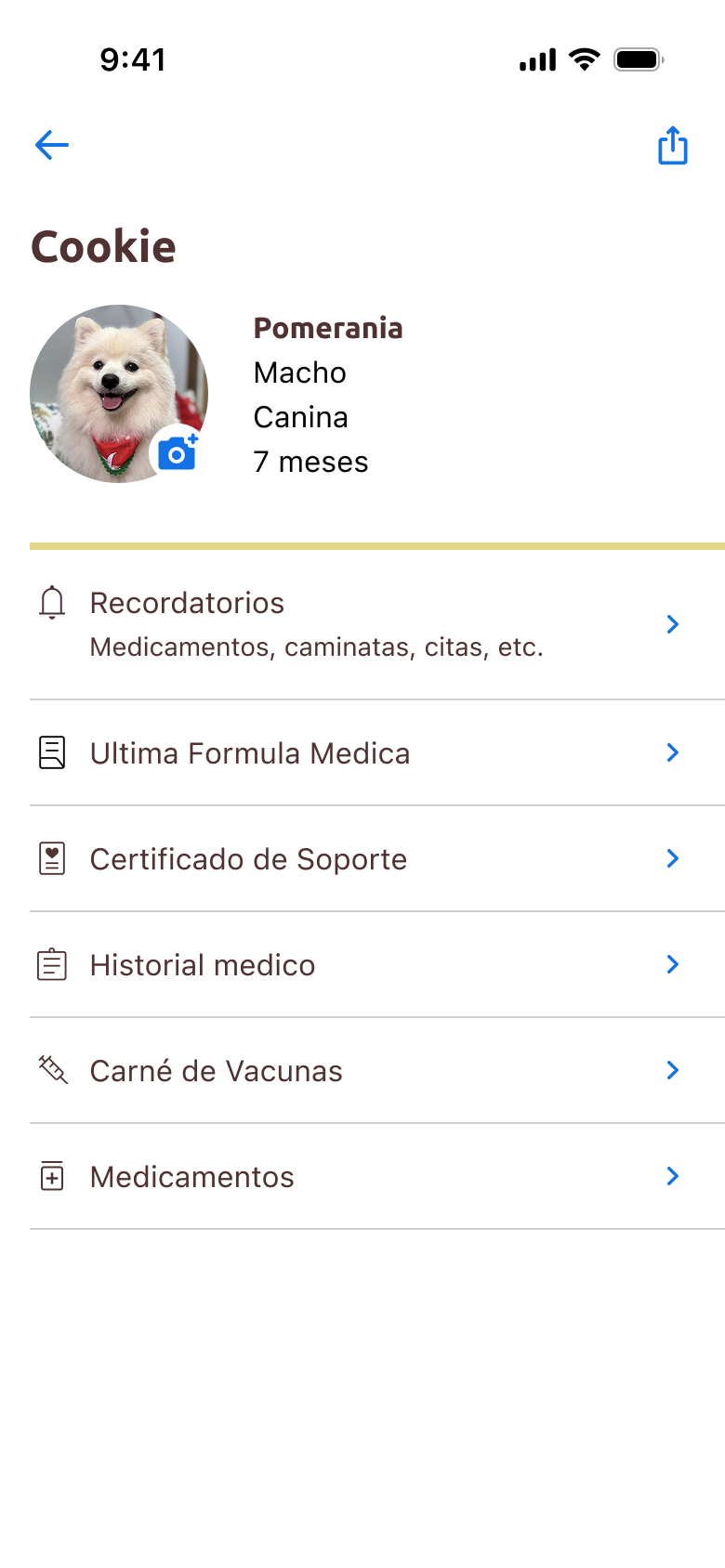
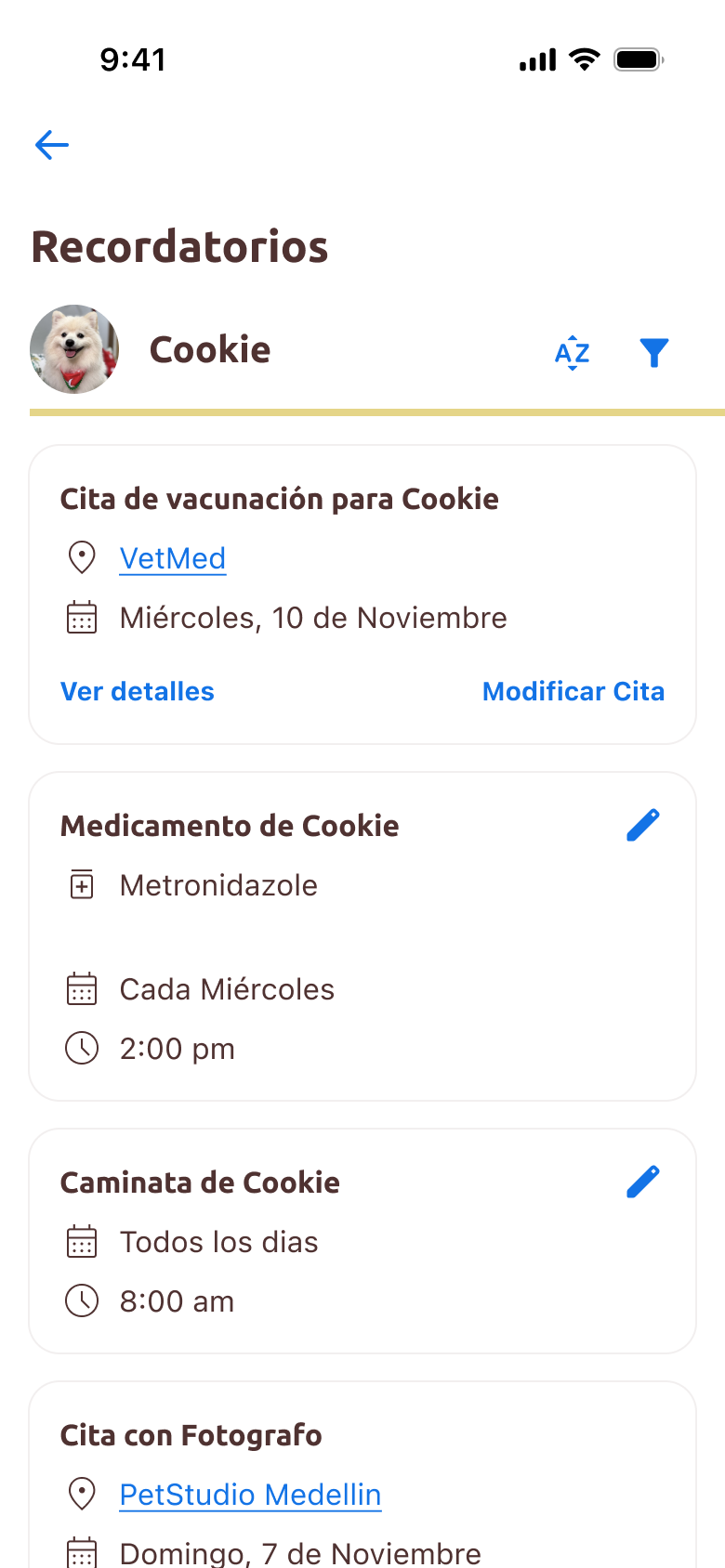
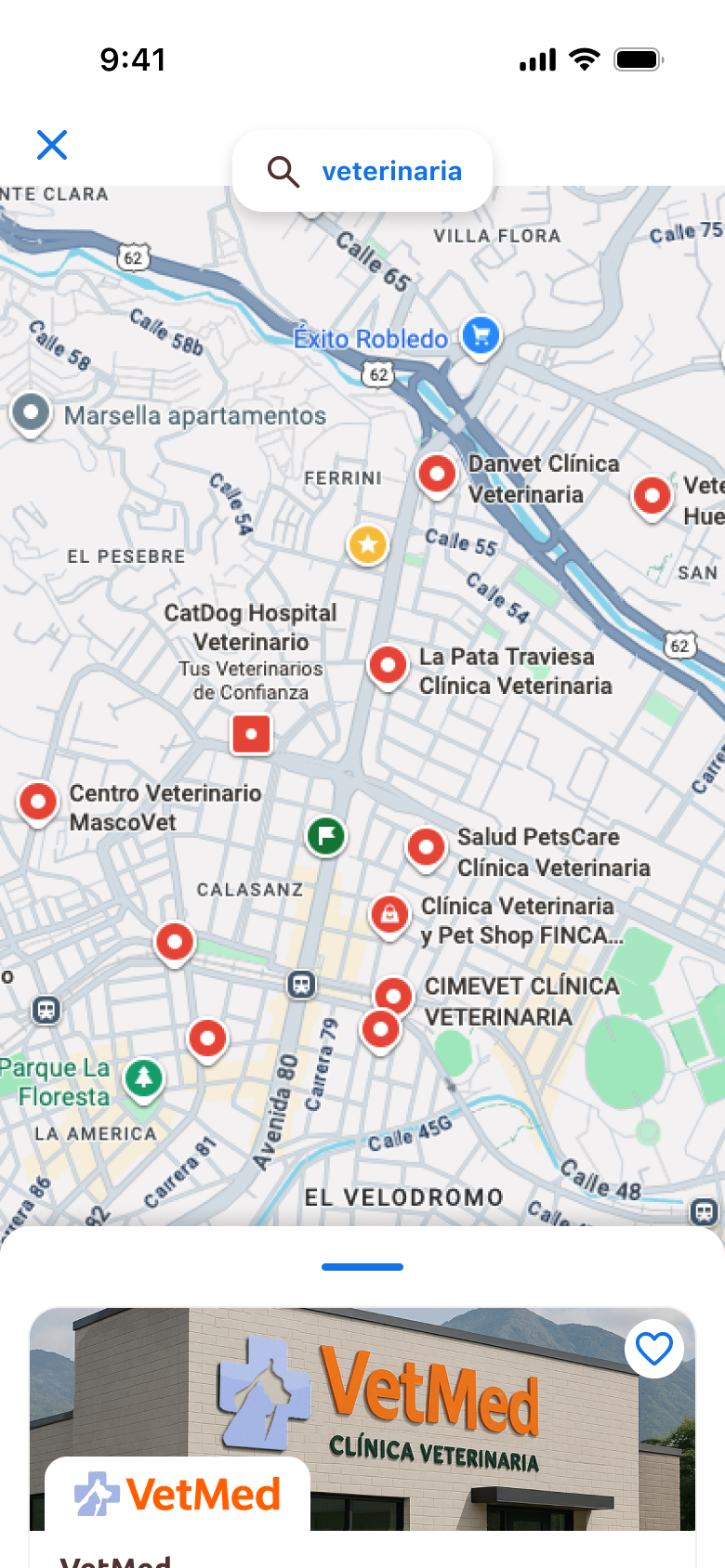
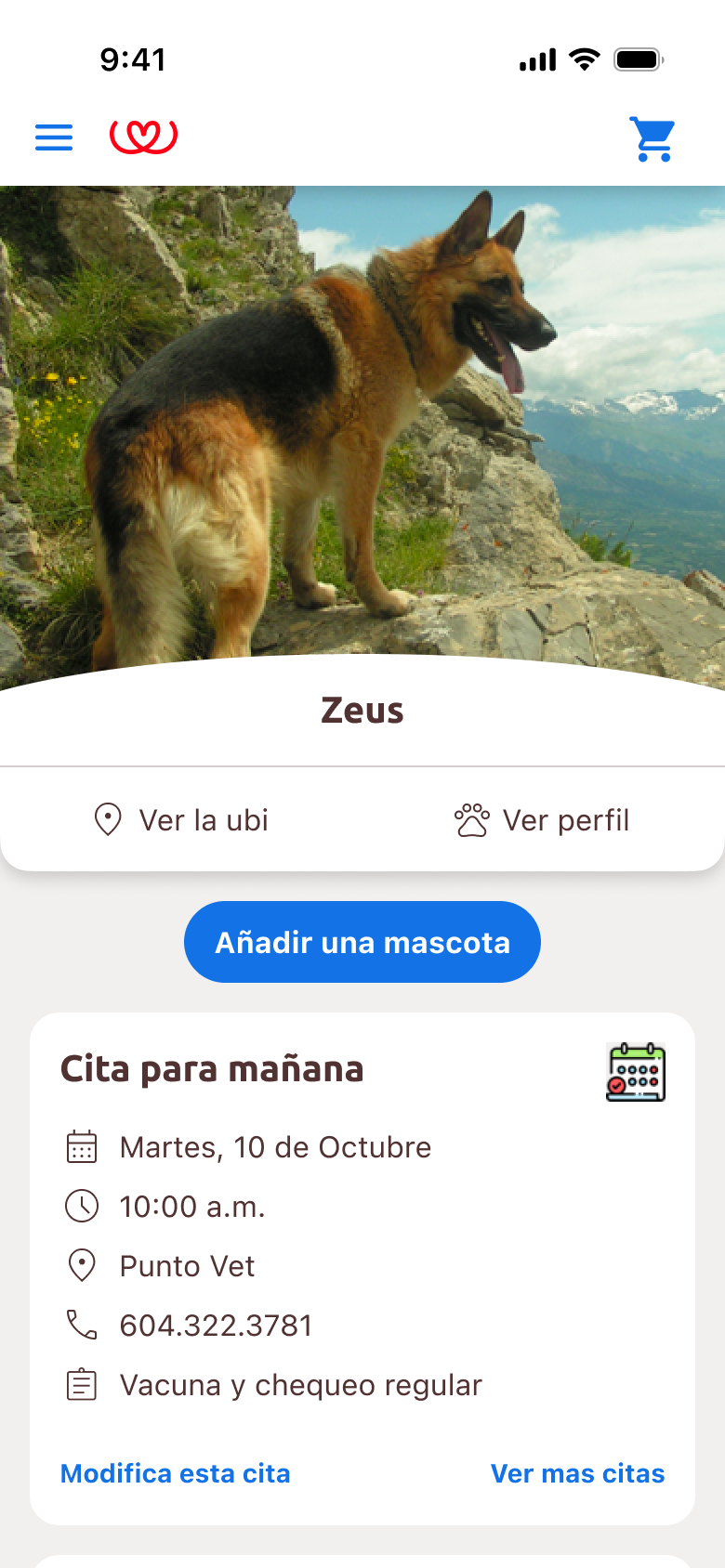
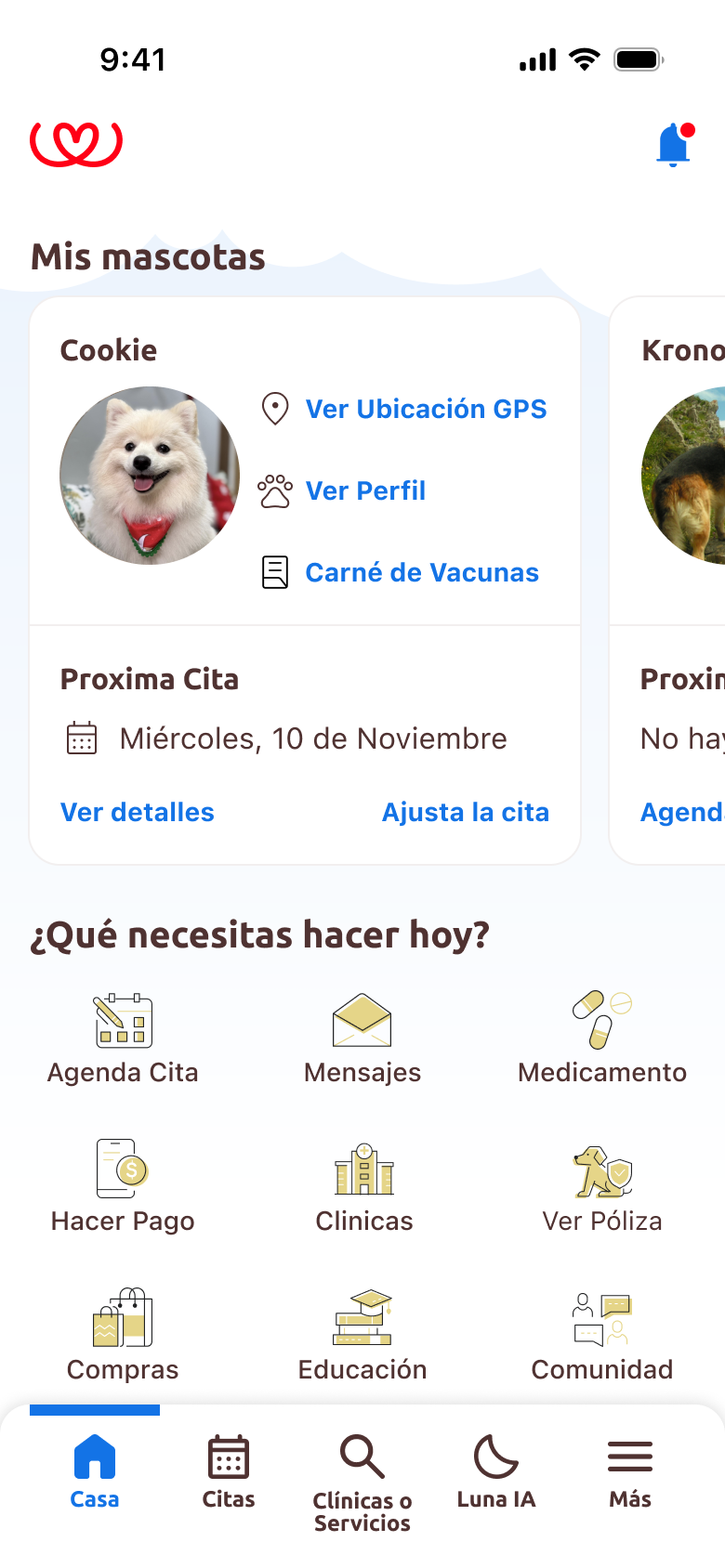
The mobile app was conceived as the customer-facing side of the ecosystem. The design needed to bring together health information, appointments, providers, reminders, services, and multiple pets without feeling like a complicated medical or administrative tool.
The experience was organized around three questions: What does my pet need? What should I do next? Where can I complete that task?
Validating the app through user interviews
I did not treat the interface as validated simply because it looked polished. User interviews explored how pet owners currently schedule care, store information, remember upcoming needs, evaluate providers, and decide whether a new platform feels trustworthy.
- Which tasks users expected to find immediately
- How people organized information for one or multiple pets
- Which labels and navigation patterns caused hesitation
- What made appointments and reminders feel actionable
- Which ecosystem features felt essential versus secondary
- What would motivate users to return after the first session
What changed after validation
Interview feedback exposed places where the original design reflected the structure of the business more than the mental model of the pet owner. The experience was reorganized around the pet, the immediate need, and the next useful action.
- Clearer navigation and terminology
- Stronger pet-centered hierarchy
- Improved visibility on actions that matter most
- A more intuitive, action and task driven experience
- Progressive disclosure of secondary information
- A more direct relationship between clinics, services, and pet information
→
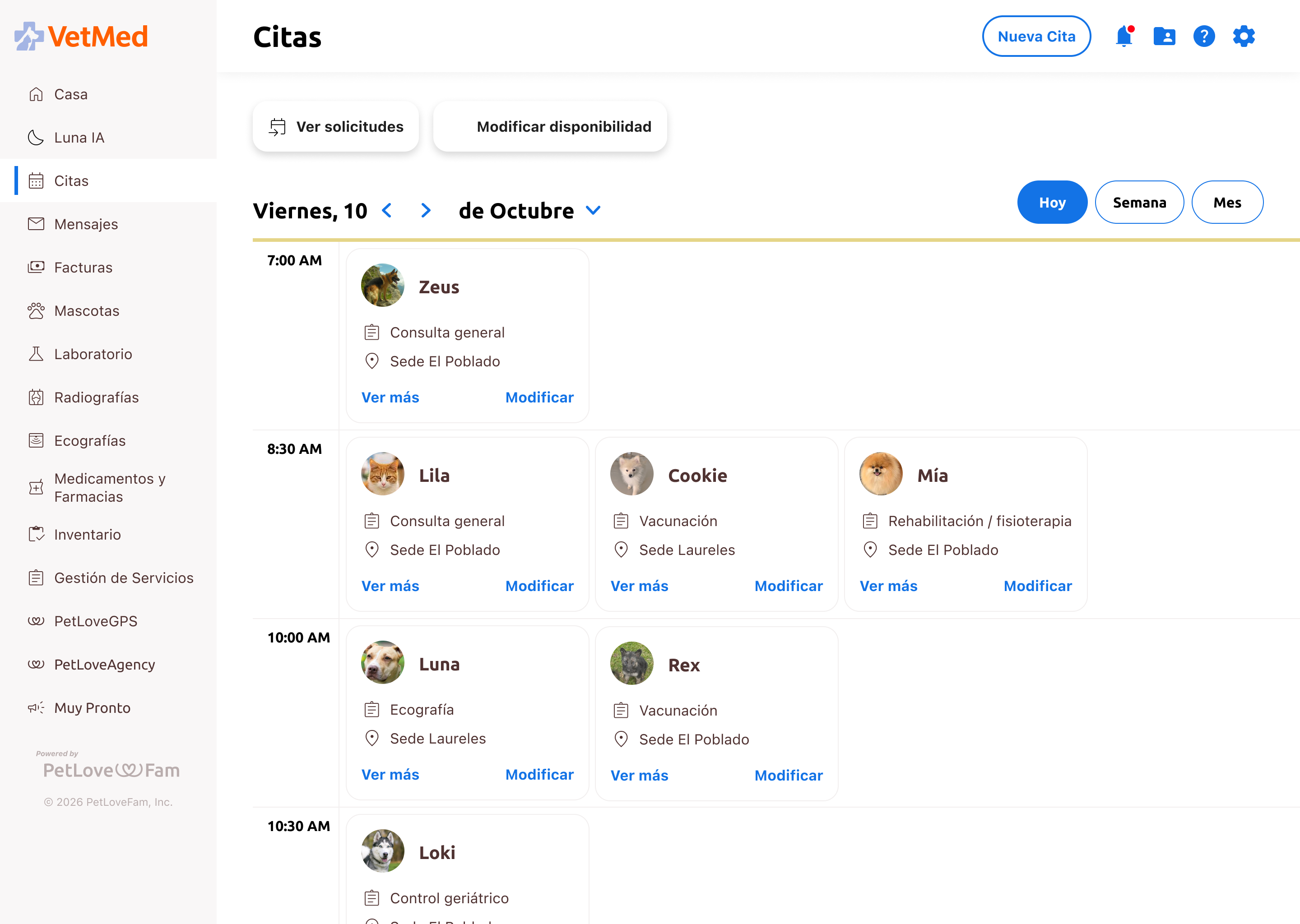
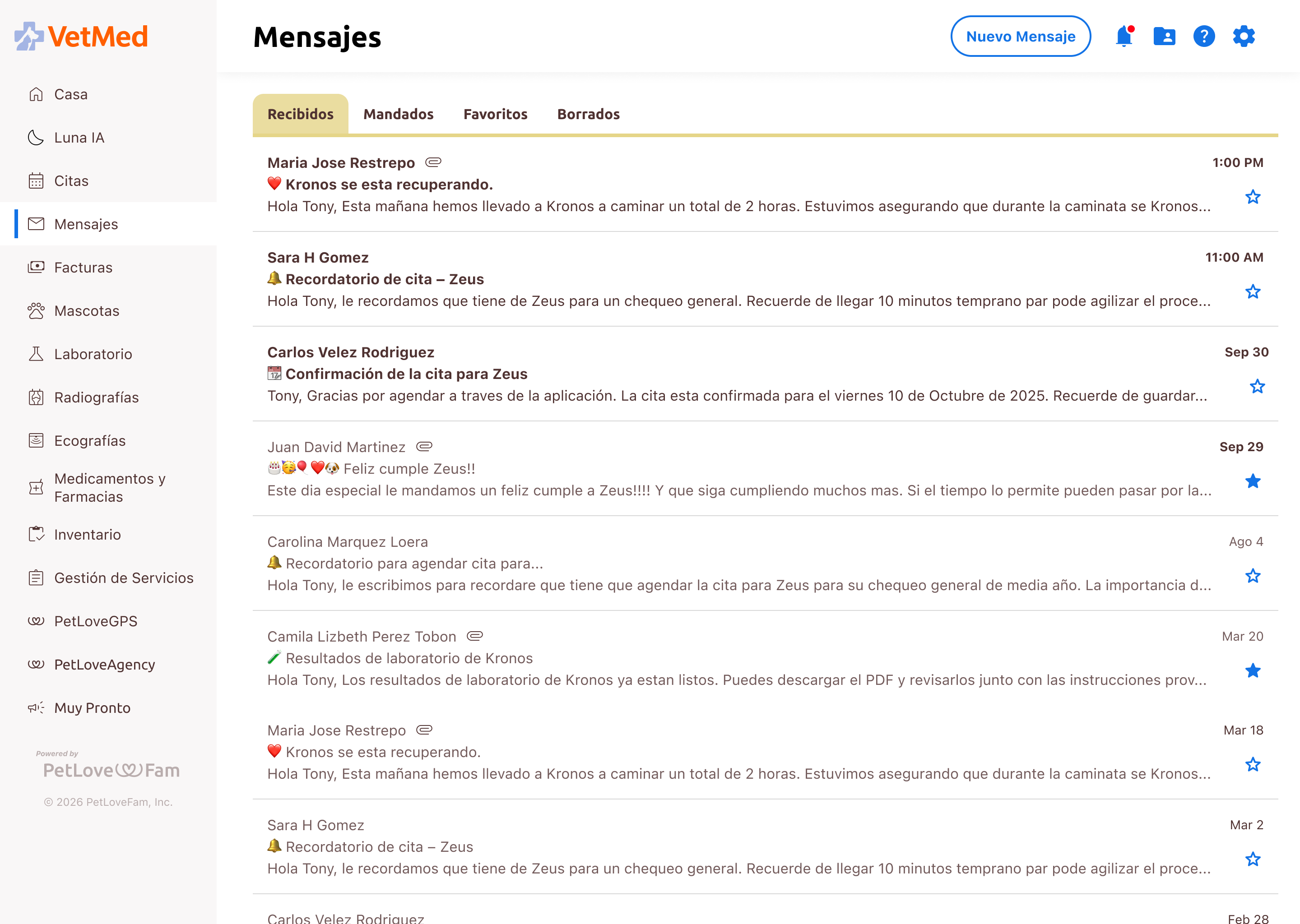
Designing PetLoveHub for clinics
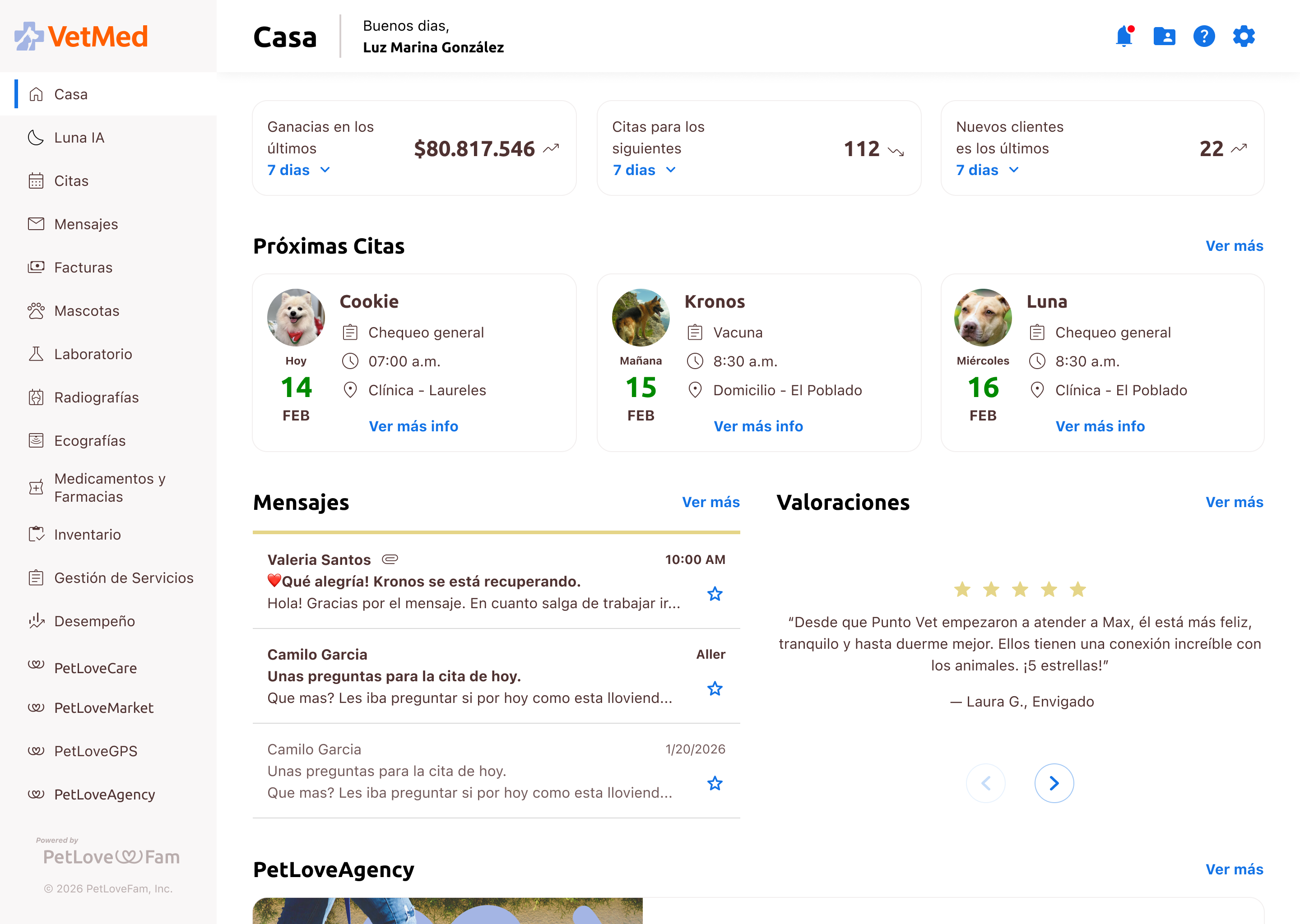
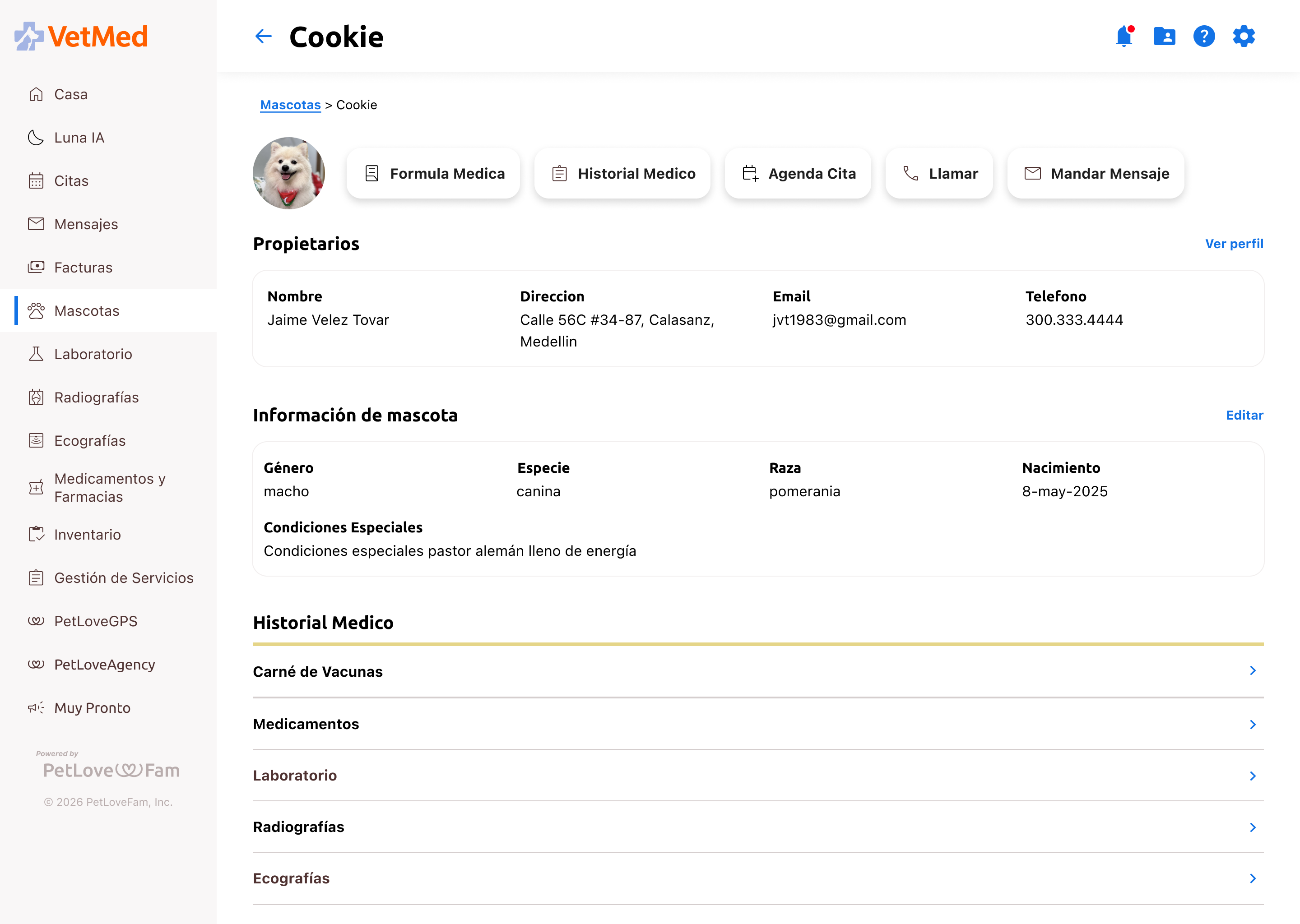
PetLoveHub serves as the central bridge of the PetLoveFam ecosystem. It connects clinics with pet owners through the PetLoveFam app, brings pet health records, appointments, communication, and clinic operations into one platform, and creates a future path for independent pet-care providers to offer their services and pet-industry businesses to sell their products.
What discovery changed
The original strategy positioned the full clinic platform as the primary entry point, with a preventive-care service for pet owners planned as the next layer of the ecosystem. Discovery revealed that replacing core clinic software required more trust, migration, training, integration, and operational change than the first product should demand.
Clinics were already managing a large portion of their customer experience through WhatsApp. The stronger initial opportunity was to improve that existing behavior before asking them to replace their operating system.
The strategic pivot
→
- Addresses an existing daily workflow
- Reduces onboarding and implementation friction
- Creates a faster path to real-world validation
- Learns from actual customer questions
- Provides value without requiring EHR migration
- Builds trust before deeper operational adoption
Introducing Luna AI
Luna was designed as a controlled communication layer, not a chatbot that attempts to answer everything. The first version focuses on appointment requests, pricing and FAQs, approved instructions, urgency recognition, and reminders.
The central question was not whether the AI could answer. It was when the customer should trust the answer—and when a person needed to take over.
Clinic-controlled knowledge
Services, prices, hours, policies, and instructions come from information approved by each clinic.
Context before action
Luna gathers the customer, pet, service, timing, and relevant symptom information needed for the workflow.
Clear limitations
The assistant does not diagnose, invent policy, or continue autonomously when the situation is uncertain.
Human escalation
Risk, uncertainty, frustration, or unsupported requests trigger a visible handoff with the context already collected.
Representative Luna workflows
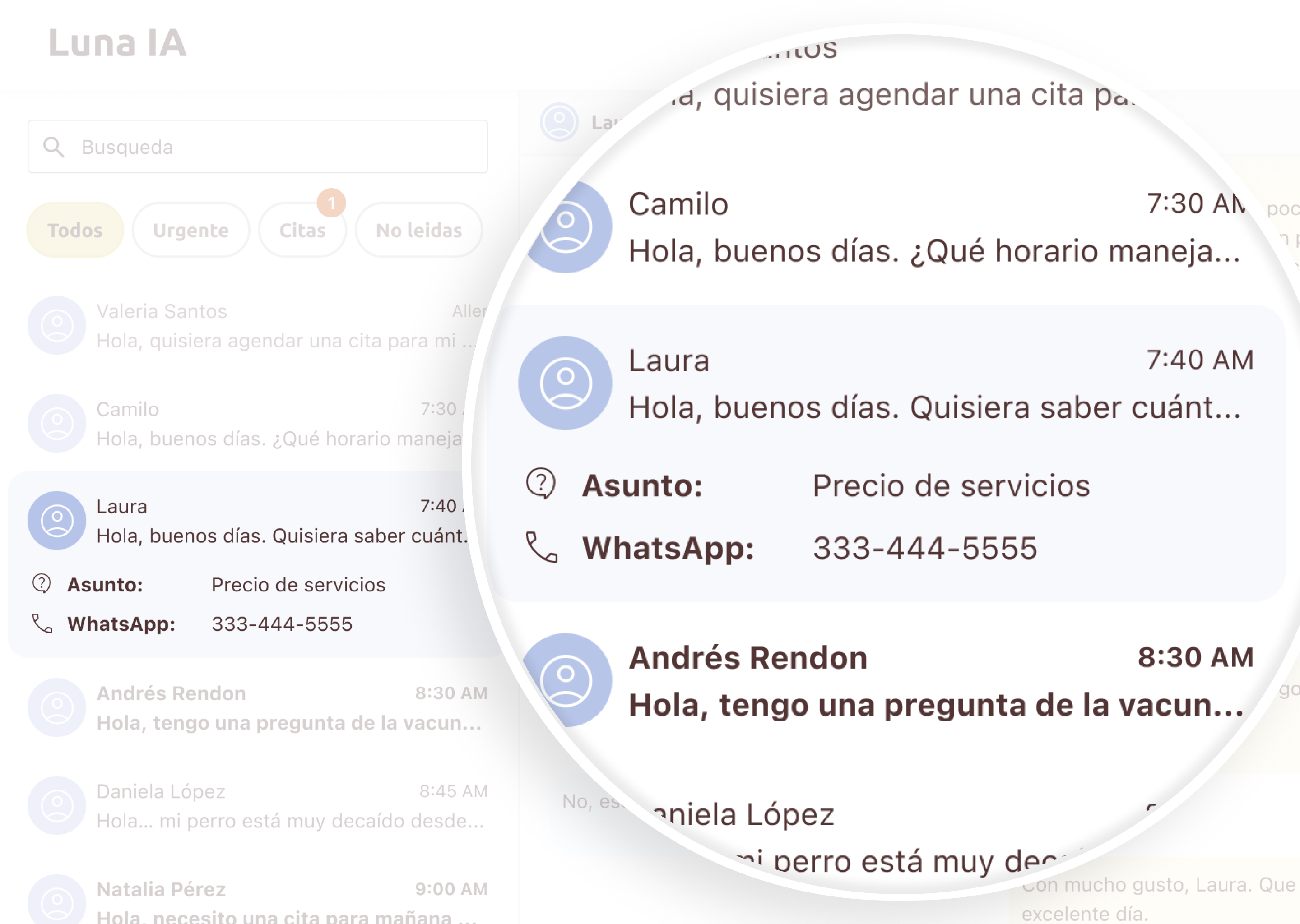
01
Routine clinic question
A pricing or service question becomes a clear path toward the next useful action.
- Identify the service and intent
- Check clinic-approved information
- Provide the appropriate answer
- Offer appointment support
- Collect customer and pet information
- Create a request for the clinic
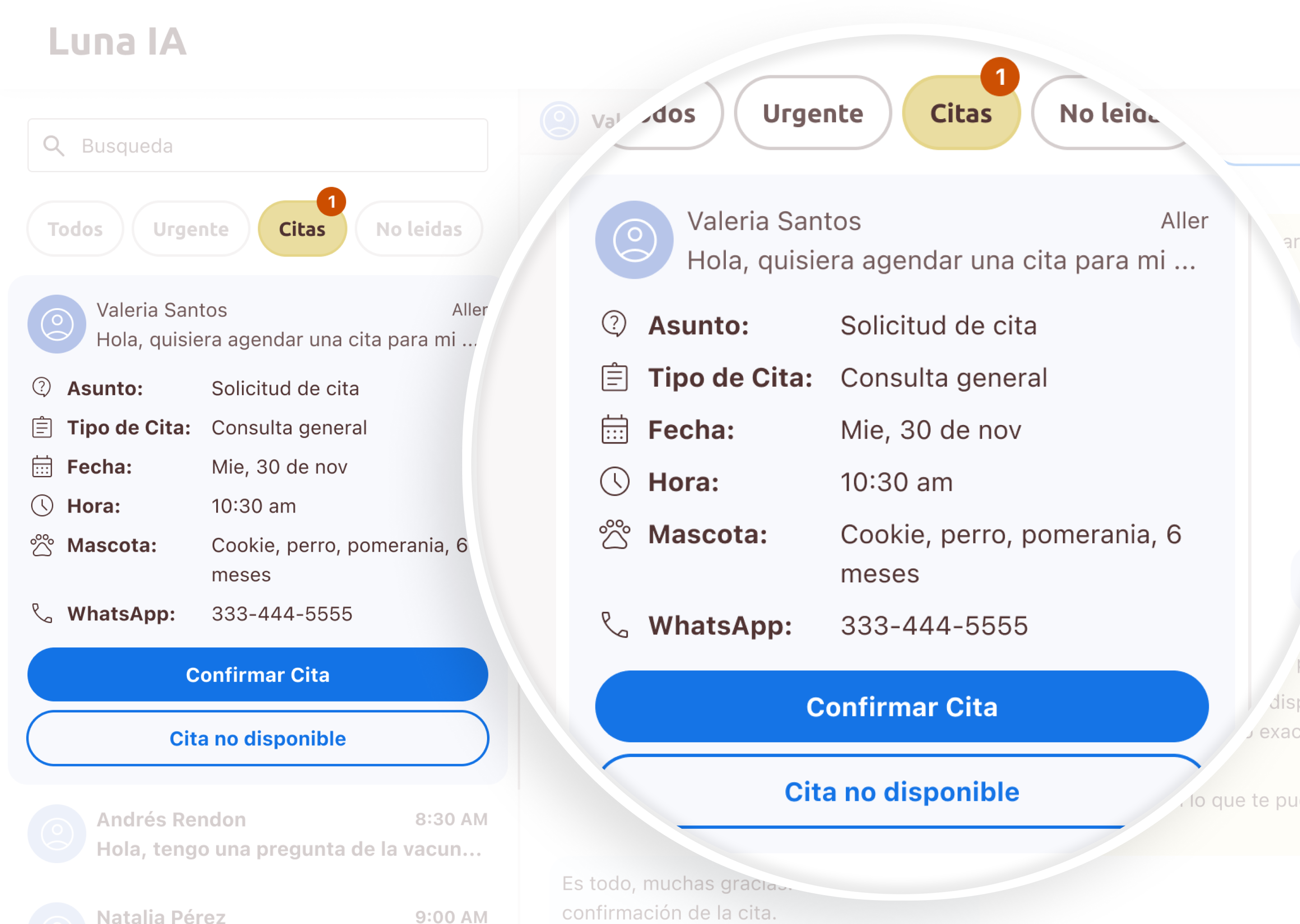
02
Appointment request
The assistant gathers the context the clinic needs without forcing the customer to repeat it later.
- Confirm the appointment type
- Collect customer and pet details
- Ask for preferred timing
- Present availability or create a request
- Confirm the next step
- Make the request visible in PetLoveHub
03
Potential urgency
The workflow recognizes risk without pretending to provide a medical diagnosis.
- Detect a potentially high-risk pattern
- Avoid diagnostic language
- Provide approved urgency guidance
- Recommend immediate human support
- Escalate the conversation
- Send context and a summary to staff
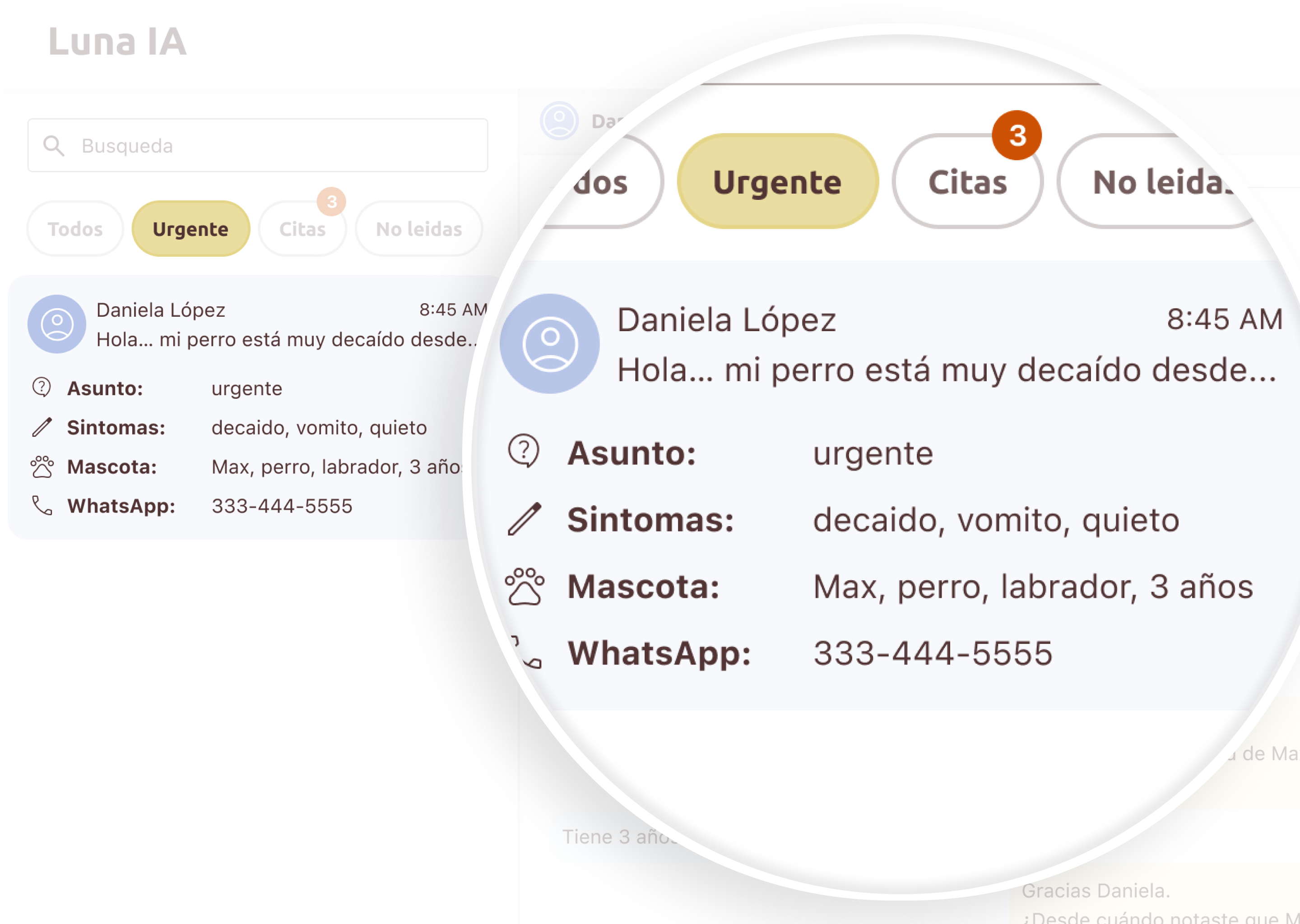
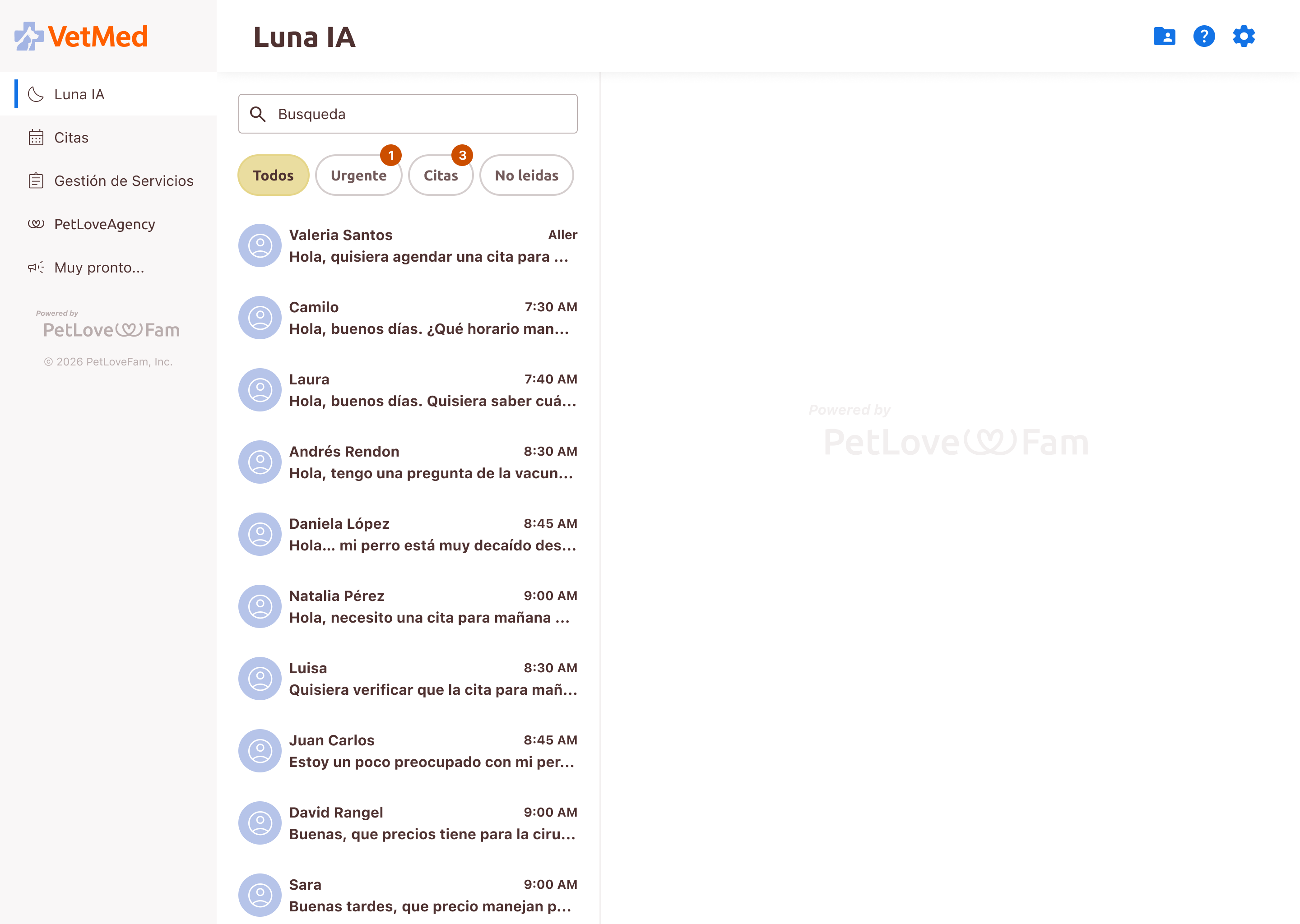
PetLoveHub Lite
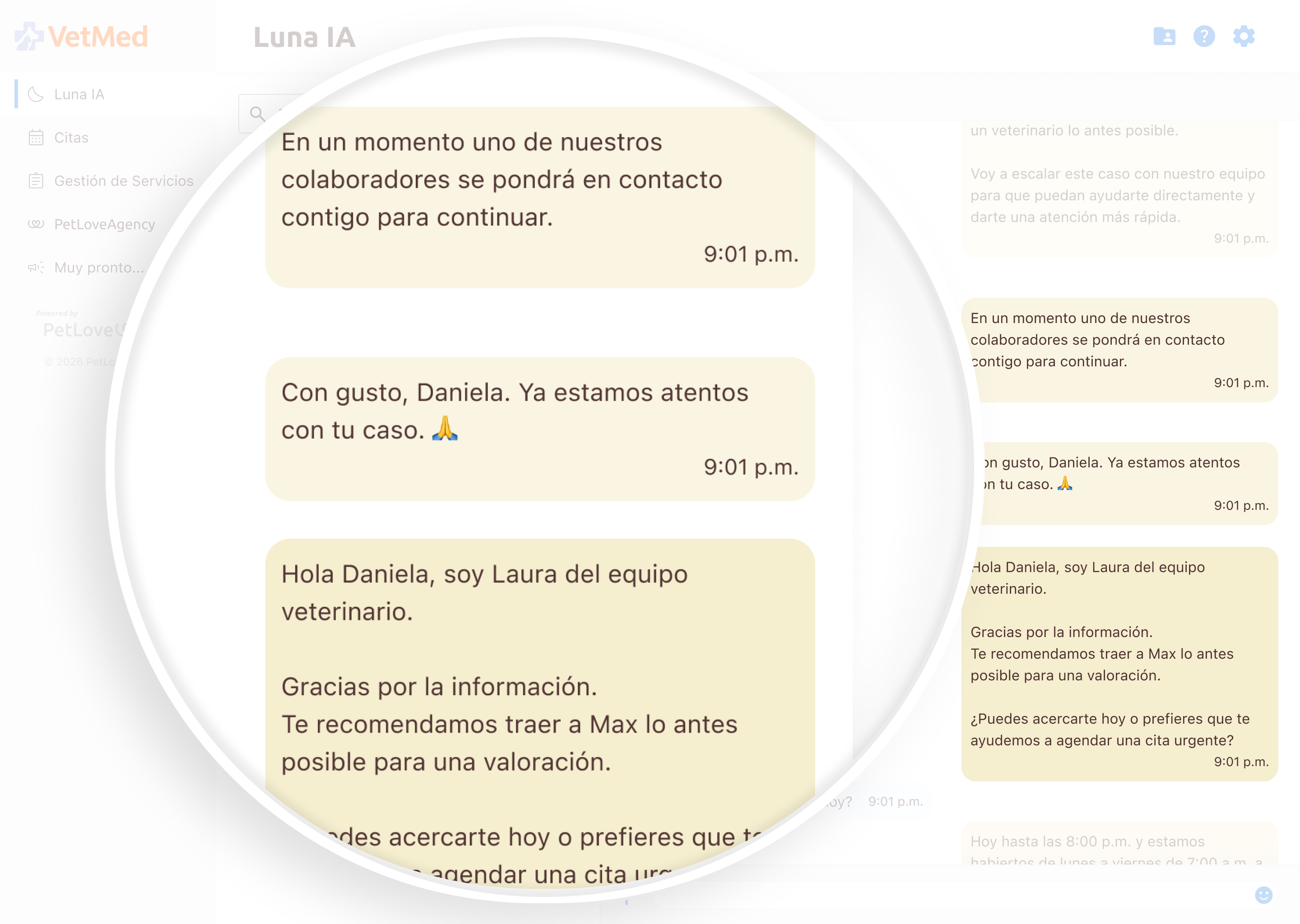
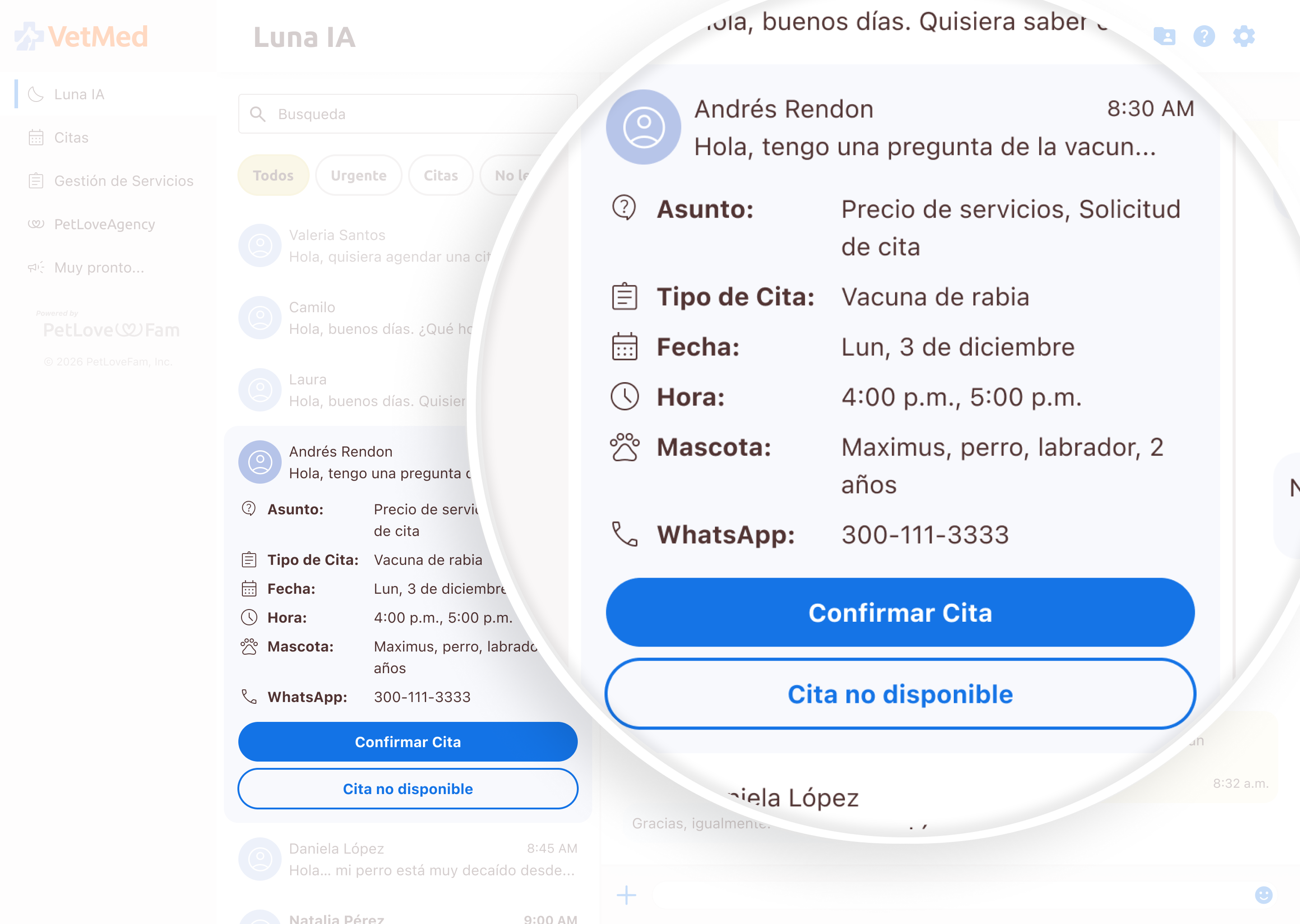
PetLoveHub Lite gives clinic staff a focused interface for managing WhatsApp conversations assisted by Luna. The inbox becomes the point where communication begins transforming into structured customer, pet, appointment, and escalation information.
- AI-assisted inbox
- Active conversations
- Human takeover
- Appointment requests
- Customer and pet information
- Conversation summaries
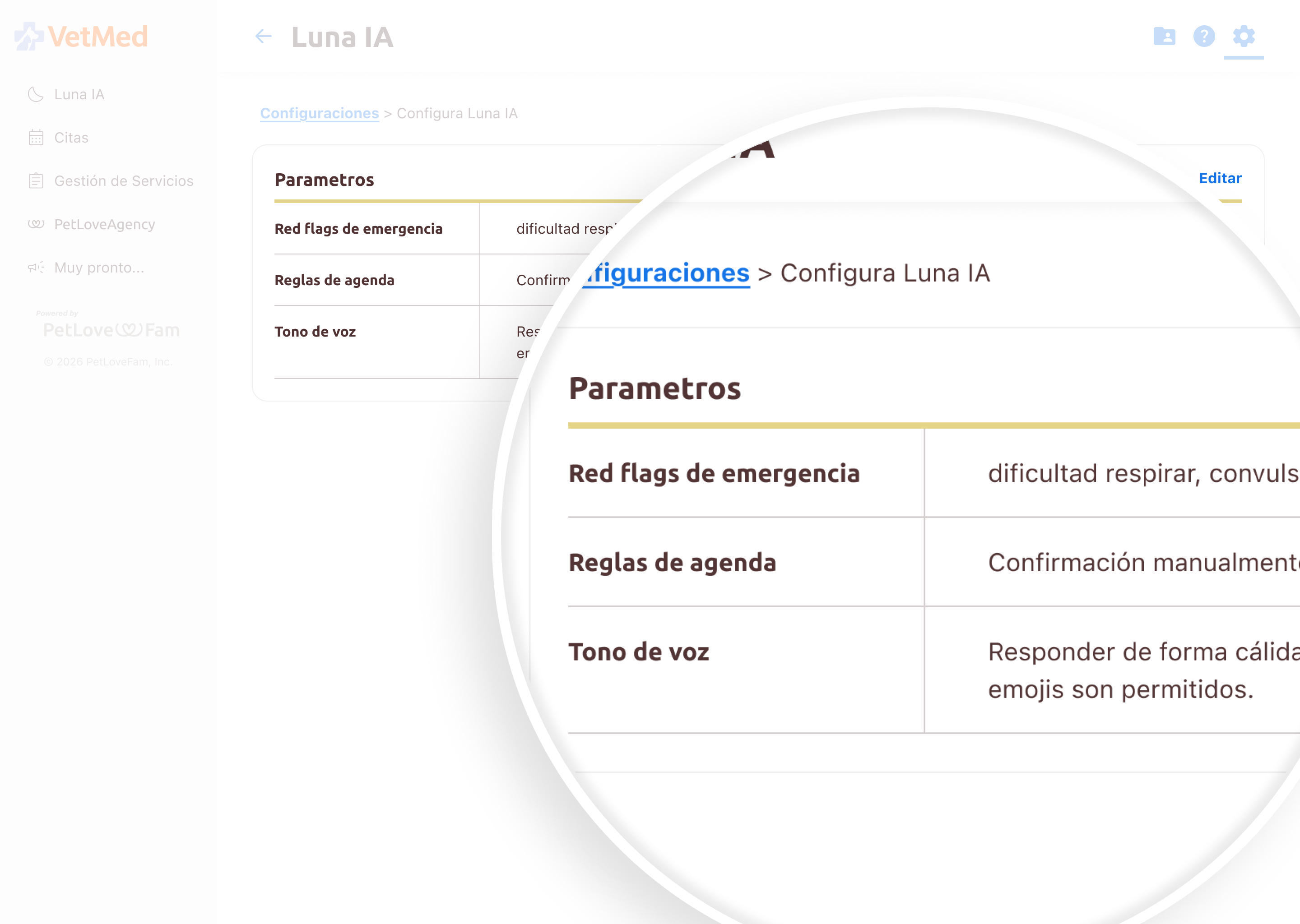
- Clinic knowledge and settings
- Escalation visibility
Product architecture and trust
Multi-clinic separation
Each clinic requires isolated customers, pet records, services, pricing, conversations, appointments, and AI knowledge.
WhatsApp communication layer
Customers continue using a familiar channel rather than being forced into a new behavior immediately.
PetLoveHub operational layer
Clinic staff manage conversations, requests, knowledge, and intervention through a structured web experience.
PetLoveFam customer layer
Customers can move into a richer app relationship without losing their clinic and pet history.
Sequencing the product
Establish the relationship
Website, Luna AI, WhatsApp, clinic information, intake, appointment requests, escalation, and PetLoveHub Lite.
Deepen clinic operations
EHR basics, appointments, payments, profiles, messaging, synchronization, and automated reminders.
Expand the operating system
Laboratories, imaging, pharmacy, inventory, operational AI, analytics, and growth tools.
Validation approach
The current strategy is to work closely with a small number of allied clinics before attempting to scale. The objective is not simply to learn whether clinics like the concept, but whether the product can support real conversations, reduce meaningful work, and preserve safety and trust.
- Most frequent customer questions
- Appointment-request workflows
- Accuracy of clinic information
- Human-escalation expectations
- Staff comfort with AI
- Customer understanding of Luna
- Required clinic controls
- Operational value and adoption readiness
What changed because of the work
The most important progress has been strategic clarity: a better understanding of how the mobile app, clinic platform, AI assistant, and commercial sequence should work together.
- Validated and iterated the PetLoveFam app through user interviews
- Improved navigation, hierarchy, terminology, and task clarity
- Defined the relationship between PetLoveFam and PetLoveHub
- Identified WhatsApp as the strongest initial communication channel
- Shifted the market entry away from an EHR-first approach
- Defined five initial Luna workflows and escalation principles
- Created the PetLoveHub Lite product direction
- Developed a phased product and commercial roadmap
Current focus
- Refining Luna’s five core workflows
- Validating language and escalation rules with clinics
- Designing and testing the PetLoveHub Lite inbox
- Structuring clinic knowledge and settings
- Defining the human-handoff experience
- Evaluating WhatsApp implementation requirements
- Measuring whether the assistant reduces repetitive communication
Reflection
PetLoveFam began as an ambitious ecosystem. The early designs made that vision tangible, and user interviews helped improve the mobile app by revealing where the experience needed to reflect the priorities of pet owners more clearly.
Clinic discovery produced a different lesson: a valuable long-term platform is not necessarily the right first product. Starting with WhatsApp, Luna AI, and PetLoveHub Lite creates a more credible exchange—solve an immediate communication problem, learn from real interactions, and expand when the evidence supports it.
A strong product vision describes where the experience can go. Strong product leadership determines the most credible way to get there.